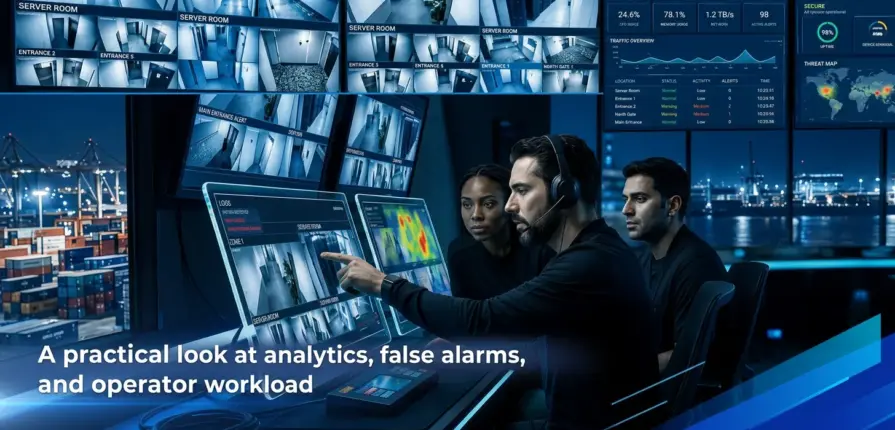
Video verification gives monitoring center operators valuable context around an alarm, but reviewing footage to determine whether an event requires action can consume significant time. As video becomes a larger part of monitoring operations, the efficiency of that review process becomes increasingly important.
Post-receipt video analytics gives monitoring centers another way to manage that workload by applying analytics to camera footage after an event has been received. At Monitor Computer Systems (MCS), we have been expanding these capabilities within Sentinel through integrations that give monitoring centers more options for incorporating video analytics into alarm handling.
What Post-Receipt Analytics Changes
Video verification allows an operator to see footage associated with an alarm and use that information to determine the appropriate response. Post-receipt analytics adds another layer of analysis once the event has reached the monitoring environment, providing additional information that can support the verification process.
Applied within alarm handling, analytics can help monitoring centers reduce the amount of unnecessary manual review associated with false alarms. That has a direct effect on labor, particularly in operations handling significant volumes of video events where reviewing every piece of associated footage places additional demands on the team.
The value is not simply having more information available. It is being able to use analytics at a point in the process where it can contribute to a more efficient response.
Bringing More Analytics Options Into Sentinel
Sentinel development has expanded the post-receipt analytics options available to monitoring centers. Certvue post-receipt video analytics is now available for camera footage analysis, while RAD Security has also been integrated for post-receipt analytics. AEY Vision support includes post-receipt cloud analytics as well as Guard Tour analytics.
For monitoring centers, these integrations provide greater flexibility in how analytics technologies can be incorporated into Sentinel. This is particularly relevant as monitoring providers support a broader mix of cameras, video platforms, and analytics services across their customer base.
Rather than treating video analytics as a separate conversation from alarm monitoring, these capabilities give monitoring centers more options for incorporating analysis into the processes they already use to handle events.
Reducing the Cost of Manual Video Review
Labor is an important part of the analytics discussion. False alarms and video events that require manual review consume operator time, even when the footage ultimately does not lead to further action.
Using analytics to assist with that review gives monitoring centers an opportunity to use their teams more efficiently. The objective is to reduce time spent on alarm activity that does not require the same level of attention, leaving more capacity for events where operator review and judgment are needed.
For a monitoring center evaluating an analytics service, that creates a much clearer business case. The value can be considered in terms of the manual workload associated with processing alarm activity and the potential labor savings available when analytics can assist with that process.
If manual video review is consuming more of your team’s time, talk with Monitor Computer Systems about the post-receipt analytics options available within Sentinel. Call 1 904 944 6750 or visit https://www.monitor.uk/contact-us/.
Analytics Has to Fit the Monitoring Workflow
The usefulness of analytics also depends on how it fits into the monitoring operation. Monitoring centers may support different video systems, analytics providers, and customer configurations, so introducing another technology should not create unnecessary complexity for the people handling alarms.
Sentinel gives MCS a platform for continuing to integrate these technologies around the monitoring process. As new analytics capabilities and integrations become available, they can be supported alongside the wider range of systems monitoring centers are already responsible for managing.
For a monitoring center, the practical value of analytics is determined by what it contributes to live alarm handling. Technology that reduces manual effort and provides useful analysis has a clear operational purpose, particularly when it can be incorporated without creating another disconnected process for the team to manage.
What This Means for Monitoring Centers
Video is becoming a larger part of alarm monitoring, but increasing video activity does not have to result in the same increase in manual review. Post-receipt analytics gives monitoring centers another tool for managing that relationship by applying analysis after an event reaches the monitoring environment.
It can also strengthen the business case for video analytics. The discussion becomes grounded in measurable operational concerns such as operator workload, false alarm processing, and labor requirements, rather than treating analytics as an added capability with benefits that are difficult to quantify.
MCS continues to expand Sentinel around these requirements, including post-receipt analytics support from Certvue, RAD Security, and AEY Vision. As monitoring centers consider how analytics fits into their operations, the focus should remain on what the technology contributes to the alarm-handling process and the resources required to deliver that service.
Learn More About Post-Receipt Analytics in Sentinel
Monitoring centers evaluating video analytics should be able to connect the technology to a clear operational benefit. Reducing unnecessary manual review while providing useful information for verification gives post-receipt analytics a practical role in that equation.
To discuss the post-receipt video analytics options available within Sentinel, call Monitor Computer Systems at 1 904 944 6750 or visit https://www.monitor.uk/contact-us/.