Replacing a core monitoring platform is a significant decision. For a large monitoring organization, that system may support years of established processes, integrations, customer requirements, and operator workflows. Even when new technology needs emerge, a full migration can involve far more scale and risk than solving the individual problem requires.
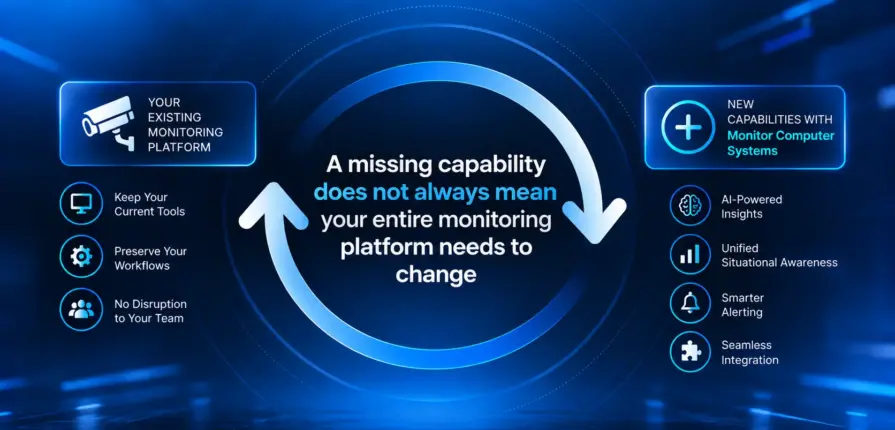
At Monitor Computer Systems, we see opportunities for standalone or integrated technology to address specific limitations while allowing organizations to continue using the systems already at the center of their operations.
A Technology Gap Doesn’t Always Require a Platform Change
A monitoring platform may continue handling its primary responsibilities effectively while lacking functionality in a particular area. The important question is what the organization needs its technology to do today that the current system cannot support.
For larger monitoring operations, that distinction can narrow the scope of the decision considerably. Existing platforms may already be tied to established workflows, integrations, and customer services. If the issue is confined to one part of the operation, adding targeted technology may be more practical than restructuring everything around a new core system.
This also allows monitoring teams to evaluate new technology based on the problem it needs to solve. They can look at how the application will fit into existing processes, what systems it needs to communicate with, and whether it can be introduced without disrupting areas that are already working effectively.
Start With the Operational Need
The need might involve:
- a new video application
- additional analytics
- a security technology the current system was never designed to support
- alarm information that needs to move between platforms so a specialized application can work alongside the primary monitoring system
Defining that need gives the technology evaluation a clear boundary. A monitoring center can determine what functionality is missing, how it needs to interact with the rest of the operation, and which systems actually need to change.
That creates room for solutions built around a particular application instead of forcing every technology discussion into a larger migration project.
If your current monitoring system cannot support something your operation needs, call Monitor Computer Systems at 1 904 944 6750 or contact MCS to discuss the available options.
Video Is a Good Example
Video requirements can develop independently from the core alarm monitoring platform. An organization may be satisfied with the way alarms are currently processed while needing additional functionality around video monitoring, analytics, or related applications.
In that situation, video can be treated as its own technology requirement. A standalone or integrated solution may provide the needed functionality while working alongside the monitoring infrastructure already in place.
This is particularly relevant to larger organizations that have invested heavily in their core systems. Adding technology around a specific video need can introduce useful functionality without requiring the organization to rebuild established alarm-monitoring processes at the same time.
The same principle can apply in other areas where a defined application has developed beyond what the original platform supports. The focus remains on solving the limitation and fitting the new technology into the wider operation.
Integration Connects New Capabilities to Existing Systems
Targeted technology still has to communicate effectively with the systems around it. A standalone application that creates an entirely separate process for operators can simply exchange one limitation for another.
MCS maintains APIs that can integrate with other platforms and support the delivery of alarms into those systems. Depending on the technologies involved, this can allow MCS solutions to work alongside an organization’s existing monitoring infrastructure rather than requiring the core platform to be replaced first.
That opens the door to a broader relationship with MCS. Sentinel may serve as the core monitoring platform for some organizations, while others may have a particular application where MCS technology can add value alongside the system they already use.
For monitoring centers with complex infrastructure and established processes, that flexibility makes it possible to evaluate new technology around a defined business or operational need.
Add What Your Operation Needs
A limitation in one area does not automatically invalidate the technology supporting the rest of the monitoring operation. Understanding the specific gap makes it easier to determine whether the answer is a broader platform change or a focused addition that can work with what is already in place.
For organizations that are not looking to undertake a full migration, standalone and integrated MCS technology can provide another route to capabilities their existing systems do not currently support.
If there is something your monitoring operation needs that your current technology cannot provide, call Monitor Computer Systems at 1 904 944 6750 or contact MCS to discuss how MCS technology could fit into your existing operation.