When an alarm reaches a monitoring center, the operator may have the signal and available video, while the people responsible for the property have something else that can be equally useful: familiarity with the site. They may recognize a member of staff working late, know that a contractor is expected, or immediately see that the activity needs further attention.
Sentinel Engage brings those people into alarm handling earlier. In a recent discussion about the latest Sentinel developments, Michael Askew, Managing Director of Monitor Computer Systems, explained how Engage gives keyholders and response teams the ability to review an event, communicate with one another, and take appropriate action while the monitoring center remains available when professional handling is required.
Giving Keyholders the Context to Act
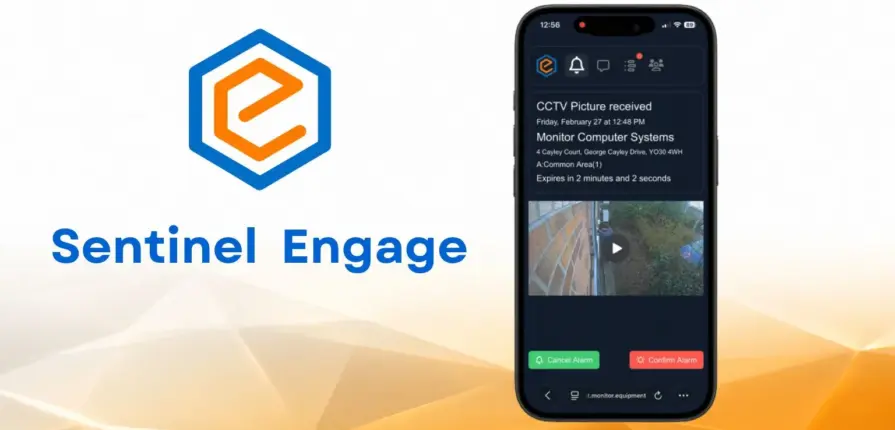
When an alarm is configured for Sentinel Engage, the relevant contacts can receive a notification on their mobile device with details about the event and, where available, the associated video.
A keyholder who knows the property may be able to identify activity quickly. Someone appearing on camera could be an employee who stayed late, a cleaner arriving on schedule, or a person who clearly should not be on the premises. Contacts can review what happened, discuss the event with the rest of the response group, and decide whether the alarm should be cancelled or confirmed. They can also coordinate who should attend the property if someone needs to investigate in person.
Bringing that site knowledge into the decision gives the monitoring center another source of useful context without removing the operator from the equation.
Reducing Alarm Handling That Does Not Need an Operator
If the keyholders identify an event and cancel the alarm, it can leave the operator queue without requiring additional investigation from the monitoring center. When the alarm is confirmed, the appropriate escalation can continue. If the contacts do not respond, the monitoring center operator receives the event and handles it through the normal process.
For a busy monitoring center, that can mean fewer operator minutes spent on alarms the customer is already able to explain. The operator remains available for events that require investigation, judgment, or escalation, while straightforward situations can be dealt with by the people who know the site.
Want to see how Sentinel Engage could fit into your monitoring operation? Call MCS at 1 904 944 6750 or contact our team to request a demonstration.
Engage Can Still Help When There Is No Video
Video provides valuable context, but Sentinel Engage is not limited to sites where a camera clip accompanies the alarm.
When an event comes from a traditional alarm system, the relevant contacts can still be notified and communicate as a group. They can share what they know, determine whether someone needs to investigate, and coordinate who will attend the property. This allows the same communication tools to support customers whose alarm systems do not include video evidence.
That is especially relevant for monitoring centers whose account base includes a mixture of conventional alarm systems and video-enabled sites. Engage does not require every customer to have the same technology before the response team can participate more directly.
More Useful Video When an Event Is Active
The same emphasis on context can be seen in Sentinel’s broader video development.
A person moving through a larger property may trigger several cameras in succession. By the time an operator opens the first view, that person may already be somewhere else on the site. Sentinel can present multiple triggered cameras together so the operator can follow the activity, then move into an individual camera when a closer look is needed.
Rather than relying on a single view of an event, the operator can work with more of the available video while deciding what should happen next.
Making Better Use of Operator Time
Near the end of the conversation, Michael described one of the broader objectives behind Sentinel development: giving monitoring centers greater capability while reducing avoidable manual work.
Filtering, automation, and sending relevant information to the right people can remove tasks that do not need to occupy an operator. As a monitoring center adds customers, those efficiencies can help create additional capacity without requiring manual alarm handling to increase at exactly the same rate.
Sentinel Engage puts that approach into practice. Keyholders receive the information available about an event, the response group has a structured way to communicate, and alarms they can resolve themselves do not have to consume unnecessary operator time. When the situation still requires professional handling, the monitoring center remains part of the chain.
For MCS, continued Sentinel development is focused on changes that monitoring centers can put to work in their day-to-day operation. Sentinel Engage is one example of how that development can improve customer involvement while helping operators spend more of their time on the alarms that require them.
See Sentinel Engage in action and learn how it could support your monitoring center. Call MCS at 1 904 944 6750 or contact Monitor Computer Systems to book a demonstration.
Sentinel. Vigilance Amplified.