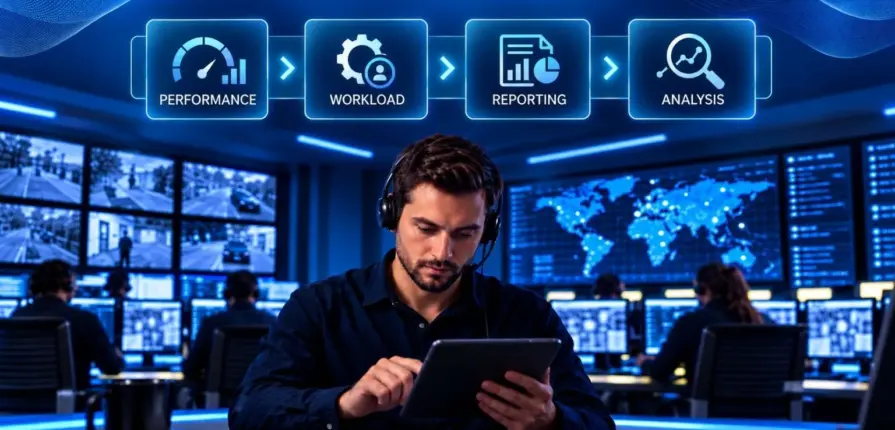
A monitoring platform processes a constant flow of information about the security events reaching the control room. For the people responsible for managing that center, there is another set of data that matters: what is happening inside the business itself.
System load, operator performance, recurring activity, reporting requirements, and changes in workload all affect how a monitoring center is managed. When that data is difficult to access or has to be assembled manually, supervisors and senior managers have a limited view of the center they are responsible for running.
At Monitor Computer Systems, we believe monitoring software should support those management responsibilities as effectively as it supports alarm handling. Sentinel gives operators the tools needed to process events while providing supervisors and managers with a broader view of performance across the center.
Supervisors Need More Than an Alarm Queue
An operator works at the level of the individual event. A supervisor has to see beyond it, with enough oversight to understand workload, team performance, and how activity is moving through the center.
Sentinel gives supervisors real-time access to graphs and tables showing system load and operator performance. This provides a clearer picture of what is happening across the team and gives supervisors useful data when reviewing workload or performance.
That information needs to be readily available to the people expected to use it. If supervisors have to collect data from several places or rely primarily on observation, it becomes harder to build a consistent picture of how the center is performing.
Current Activity Only Tells Part of the Story
Real-time data is important, but management also needs to understand performance across longer periods. As a monitoring center grows, additional accounts, services, operators, and technologies create more activity to evaluate.
Reporting gives managers a way to examine that activity beyond what they can see during an individual shift. They may need to review workload patterns, analyze particular areas of the service, or provide regular information to senior leadership.
Sentinel includes reporting and analysis tools for that work, including data mining and reports that can be scheduled for automatic email delivery. This gives management a structured way to review performance without relying entirely on manually assembled reports.
If your management team has to work too hard to understand what is happening across your monitoring center, it may be worth reviewing what your current platform provides. Call Monitor Computer Systems at 1 904 944 6750 or contact MCS to discuss Sentinel.
Reporting Should Fit the Way the Business Works
Repeatedly extracting data, building the same spreadsheet, producing the same report, and distributing it to the same people creates administrative work around information the platform already holds.
Scheduled reporting can make that process part of the normal management workflow. Reports can be generated when they are needed and sent directly to the appropriate people without requiring someone to recreate the process each time.
Sentinel can also support secure automated data interchange with corporate IT systems. For larger organizations, this provides another way to connect monitoring data with systems used elsewhere in the business.
Reporting becomes more useful when it reaches the right people in a form they can work with, rather than simply existing somewhere inside the monitoring platform.
Different Roles Need Different Views
Operators, supervisors, managers, customers, and technical personnel use monitoring software for different reasons. The information presented to them should reflect those responsibilities.
Operators need what is required to assess and handle events. Supervisors need oversight of workload and performance. Senior management needs reporting that helps them evaluate activity across the business.
Sentinel supports those different responsibilities through user controls, data visibility settings, supervisor tools, and management reporting. This allows organizations to make relevant information available without placing every function and data point in front of every user.
For monitoring centers reviewing new software, this is an important part of the evaluation. The platform has to support the people handling alarms, but it also has to give leadership enough insight to understand how the wider center is performing.
See More of the Monitoring Center You Manage
Monitoring centers already generate the data managers need to understand workload, performance, and service delivery. The real question is how easily that data can be accessed and used.
Sentinel gives supervisors real-time views of system load and operator performance, while its reporting and analysis tools give managers a broader perspective across the business. Together, those capabilities connect day-to-day activity in the control room with the information needed to manage it effectively.
If your current monitoring platform makes it difficult to understand performance across the center, call Monitor Computer Systems at 1 904 944 6750 or contact MCS to learn more about Sentinel.